💧 01
Gaze into the Blue Eye
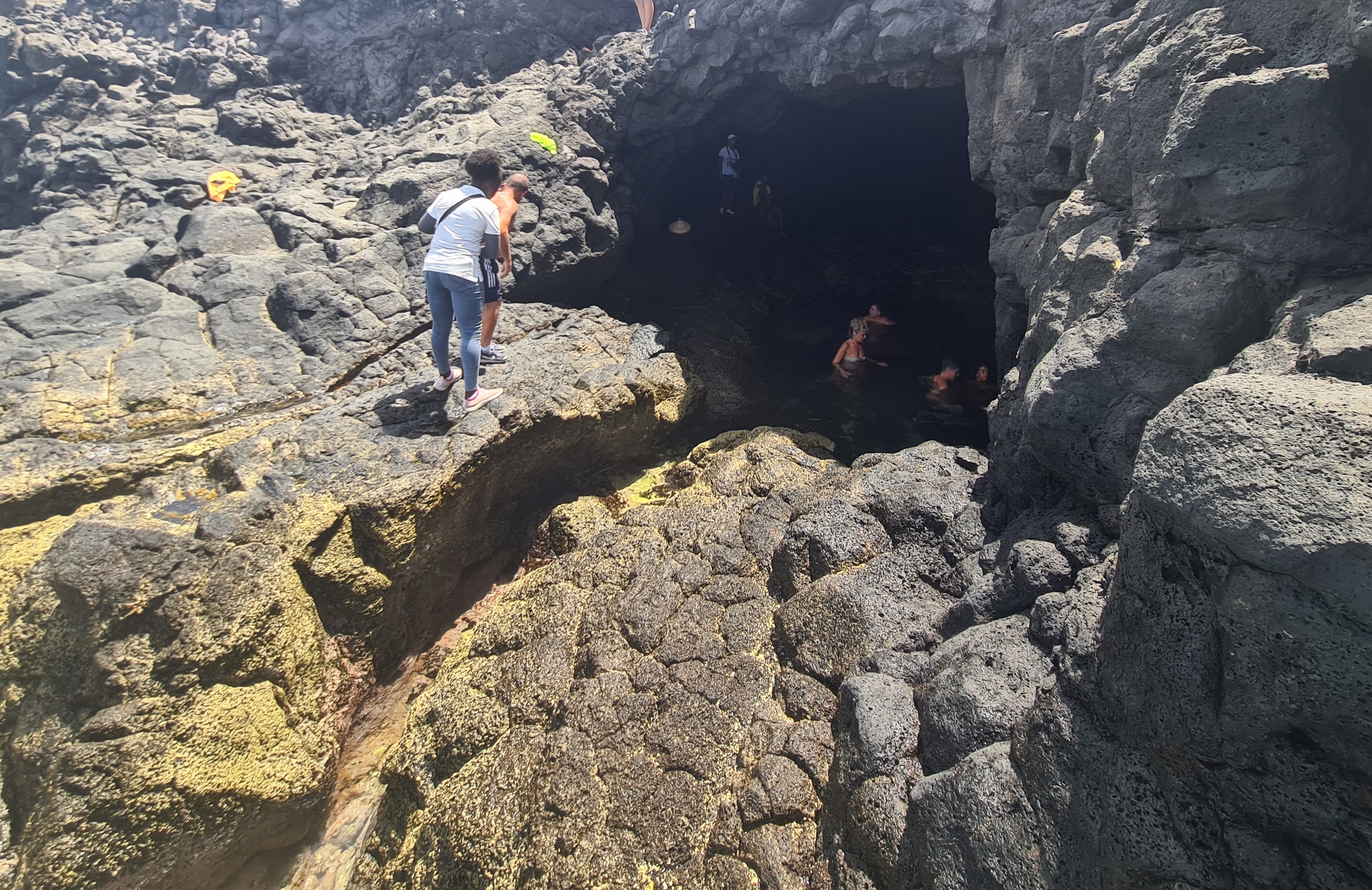
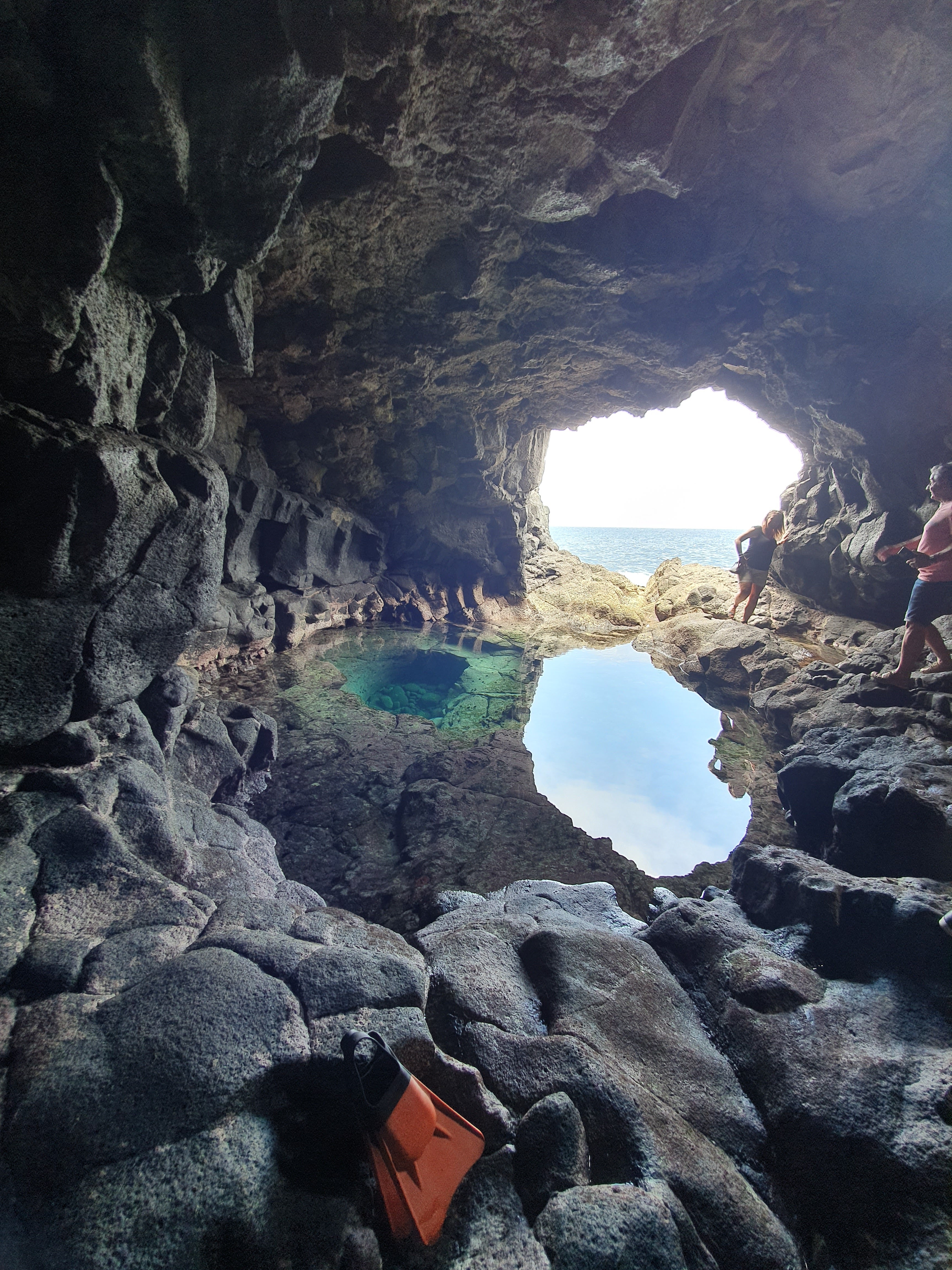
Around noon, sunlight strikes the cave floor and the water refracts its most intense blue. Lean over the rim and the whole pool looks like a lit sapphire.
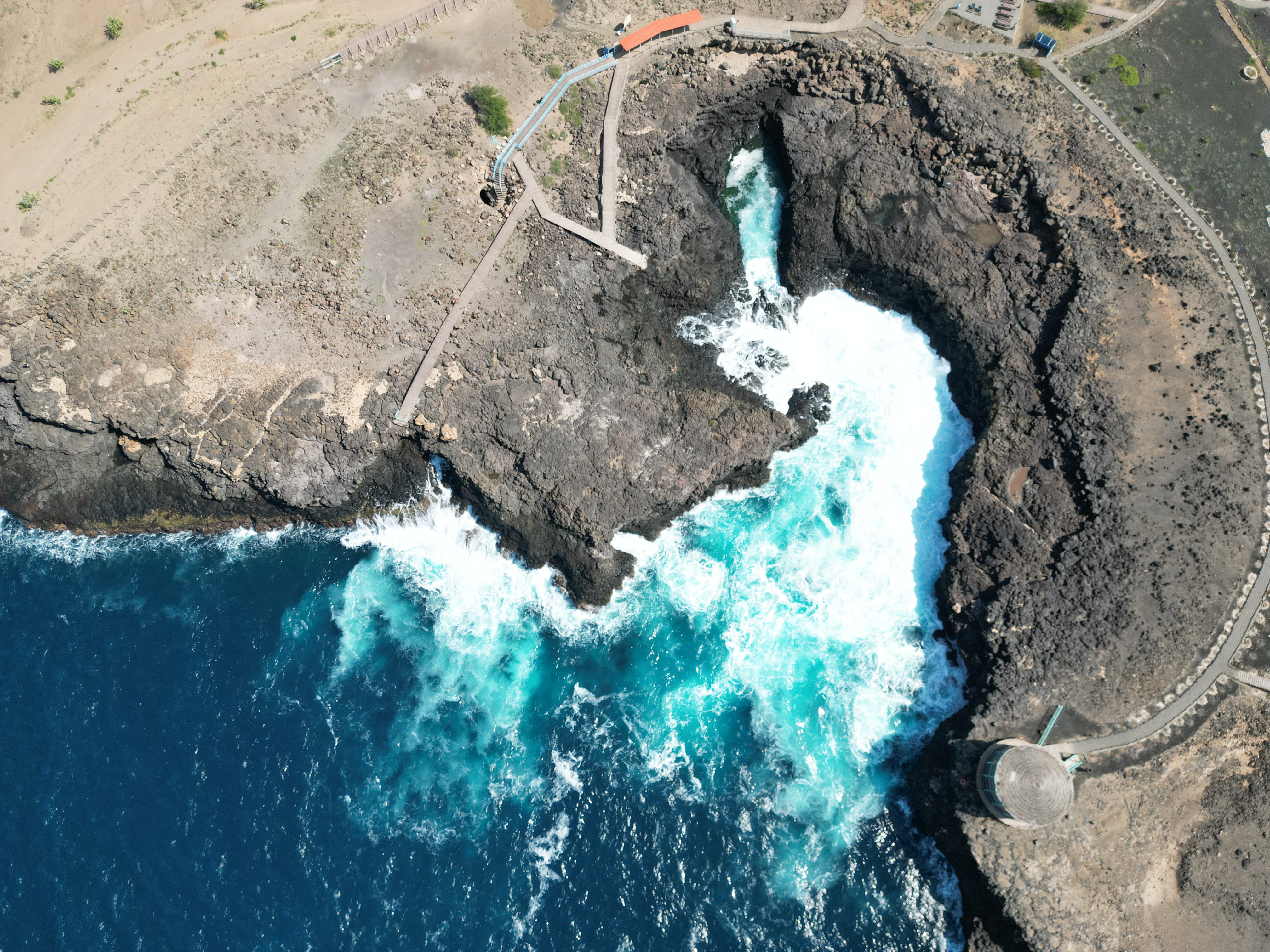
Buracona · A basalt sea cave and tide pool near Palmeira, Sal — where sunlight pierces the seawater and refracts into a deep blue glow at the bottom of the cave, one of Cape Verde's most surreal natural wonders.
View location on Google MapsTo every traveller who reaches Sal
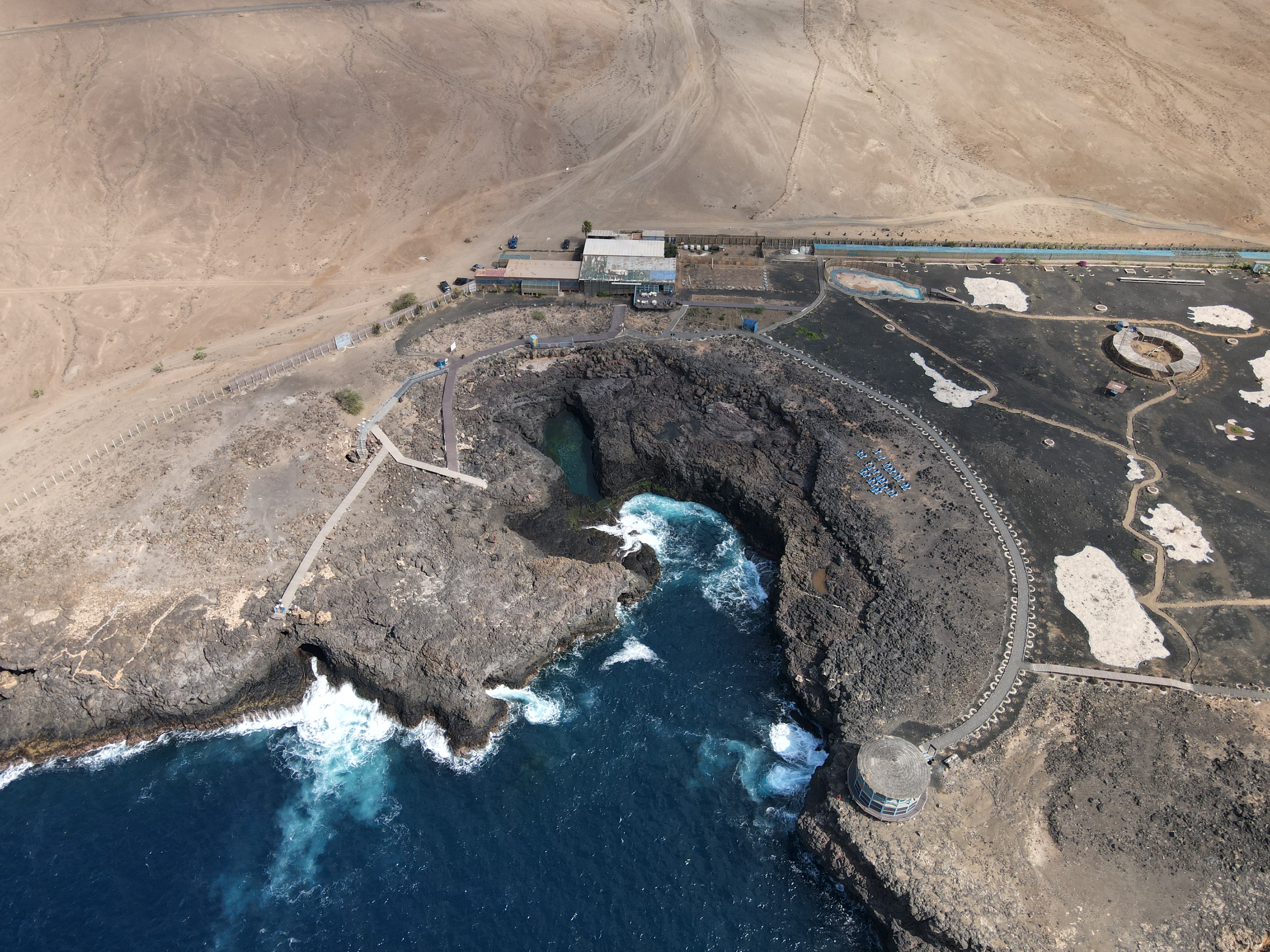
Welcome to Buracona. In Cape Verdean Creole, "Buracona" means "the big hole" — a natural blue pool carved where basaltic lava cracked and the sea poured in, hidden in the wild northwest of Sal island. Sunlight slants through the opening, pierces the clear seawater, and paints a hypnotic blue glow on the cave floor, which locals call the "Olho Azul" (Blue Eye).
There are no rides, no noise — only wind, volcanic rock and a pool of blue that shifts with the light. Around noon, when the sun climbs highest, the blue glow is at its most intense; at dusk, the nearby "Last Breath of the Sun" (Último Suspiro do Sol) sets the whole sky ablaze in gold and red. In its plainest way, Buracona tells the thousand-year conversation between volcano and ocean.
As an independent editorial team, we built this site not only to tell you how to reach the Blue Eye, but to invite you to arrive as a guardian rather than a mere visitor. When you stand on basalt polished by ocean wind for aeons, you become both a witness to Sal's wilderness and a co-keeper of its blue light.
Take a photo of the blue. Leave the lava as you found it.
Let the Blue Eye keep glowing for Sal, every single noon.
Around noon, sunlight strikes the cave floor and the water refracts its most intense blue. Lean over the rim and the whole pool looks like a lit sapphire.
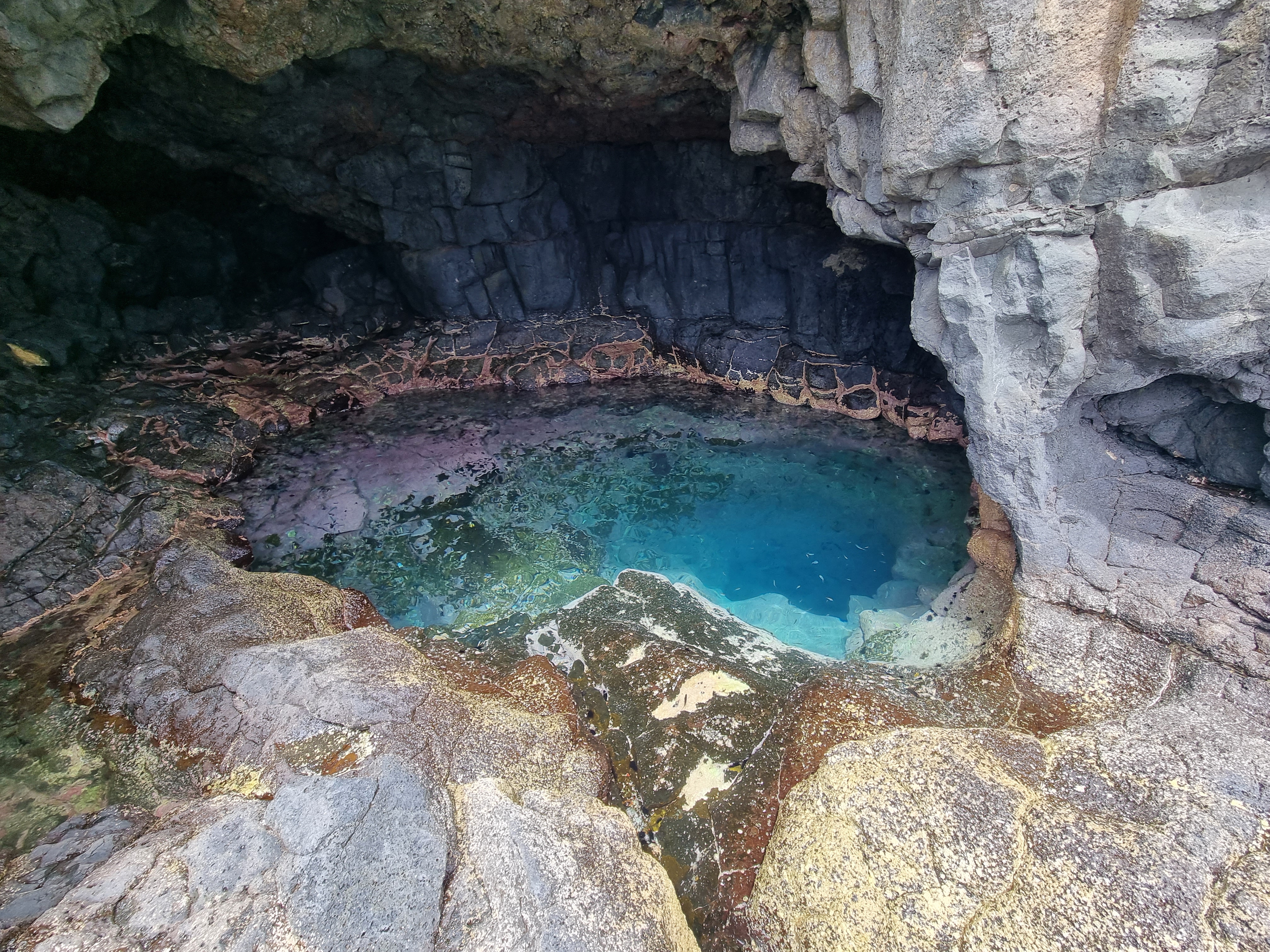
Beyond the Eye, Buracona has an open volcanic tide pool — clear, calm water, a cool spot for a snorkel or a dip (follow your guide's lead).
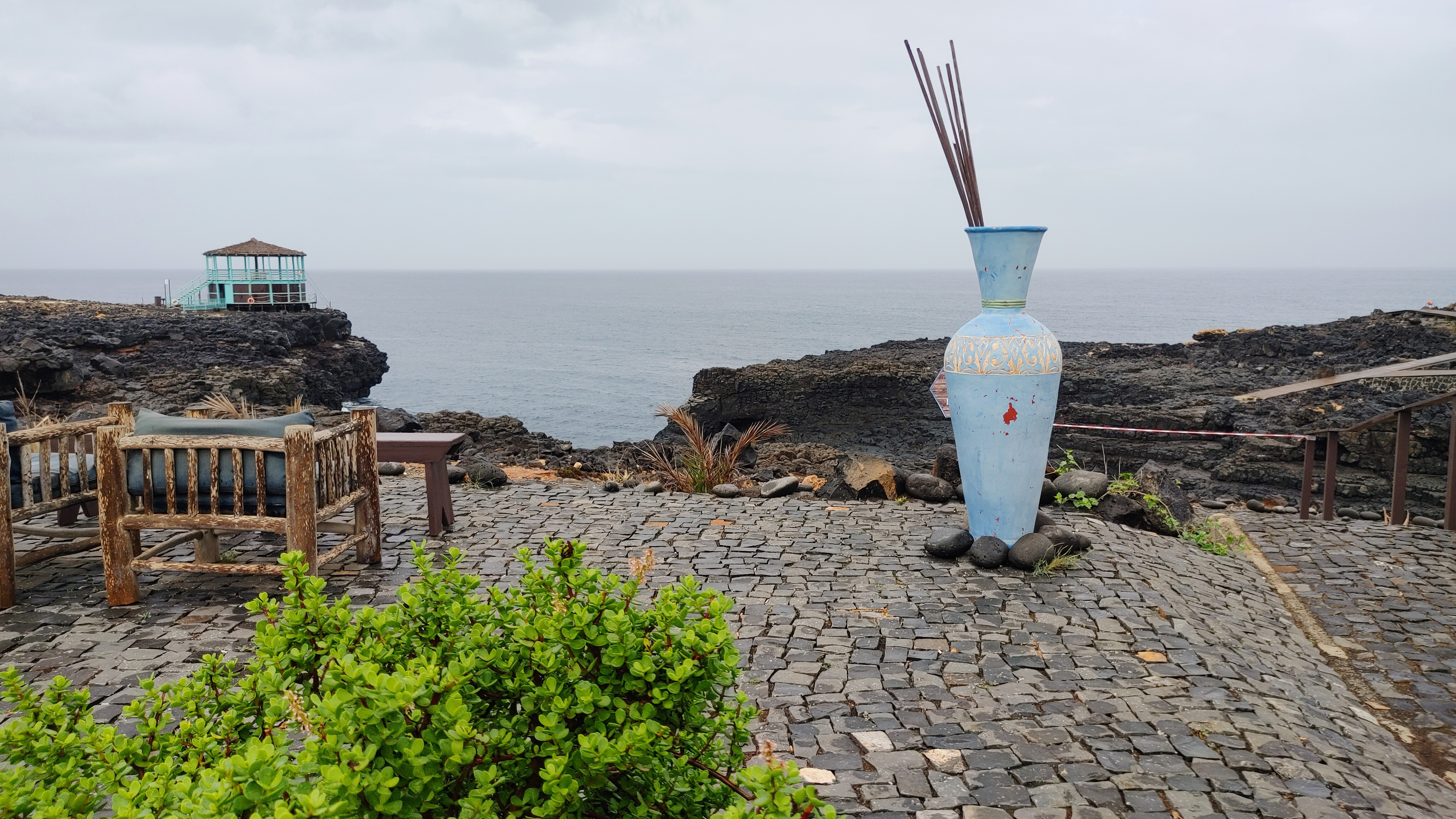
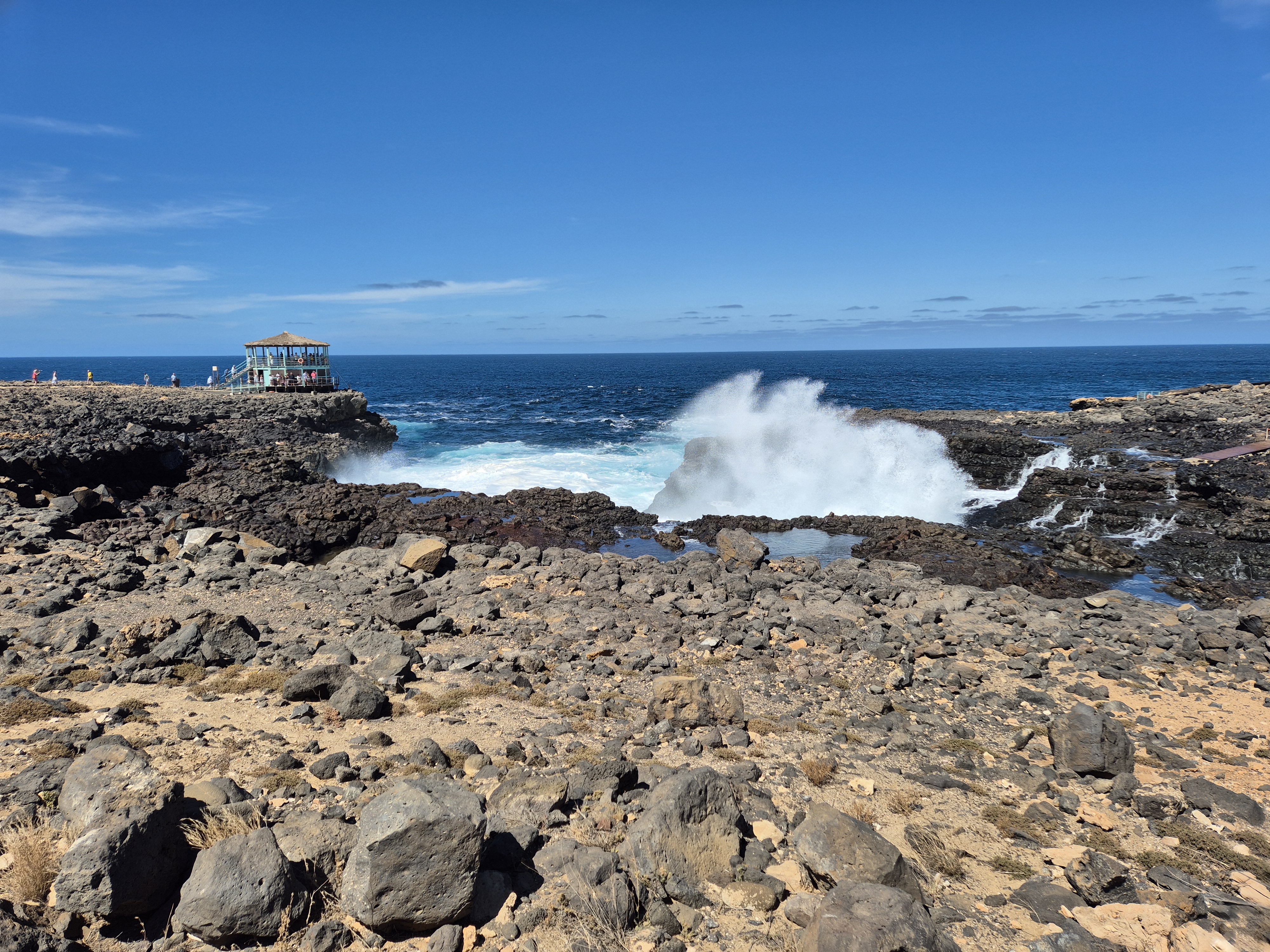
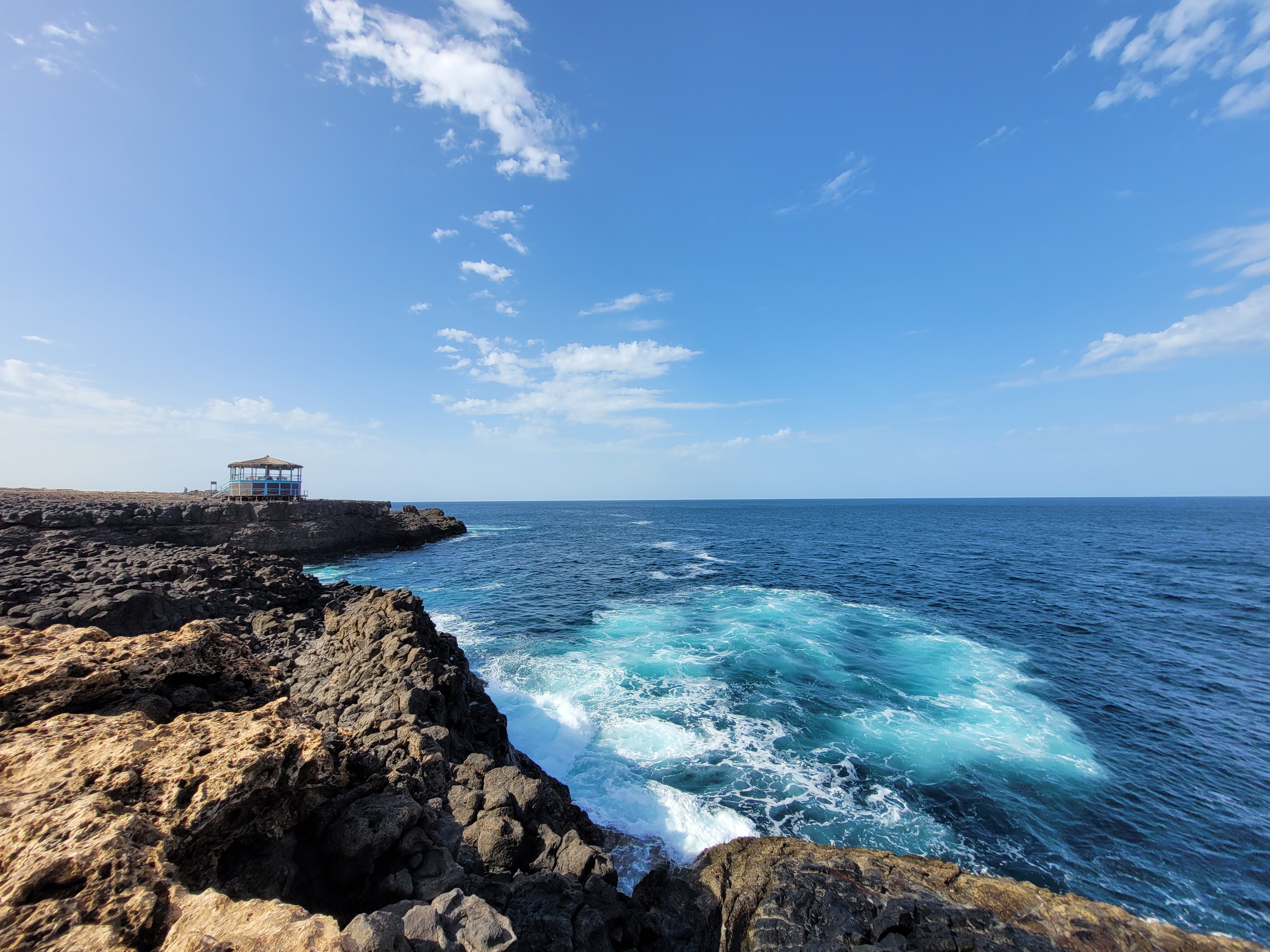
A few minutes' walk from the Eye, a ledge faces the open Atlantic. At dusk the sun drops into the ocean — locals call it the "Last Breath of the Sun", one of Sal's most romantic sunset spots.
Open daily 09:00–18:00, managed by a local community association. The Blue Eye peaks at noon (11:00–13:00) — but that is also tour-bus peak. For a quiet swim in the tide pools, arrive before 10:30.
Run by a local community association — paid entry with a guide. Price as posted on site; bring cash (euros or Cape Verdean escudos).
The Blue Eye alone: ~30 min. Add the pool, the sunset window and photos and you can linger 1–2 h.
Sunset time and the angle of light shape what you see. Data is fetched live from public APIs to help you plan.
Drag the time to see why the Blue Eye peaks around noon. This is an illustrative curve (approx. sun angle), not a measurement.
Buracona sits in the wild northwest of Sal, about 30 km from the main town Santa Maria. There is no direct bus — rent a car, hire a taxi, or join a day tour.
Not advised · Buracona is remote, shadeless and poorly supplied; cycling or hiking alone is risky. If you must, start at dawn with plenty of water.
From fissures and sea caves carved into basalt, to the beam of blue at noon, to the ledge where locals bid the sun farewell — behind this wilderness lie key memories of Sal.
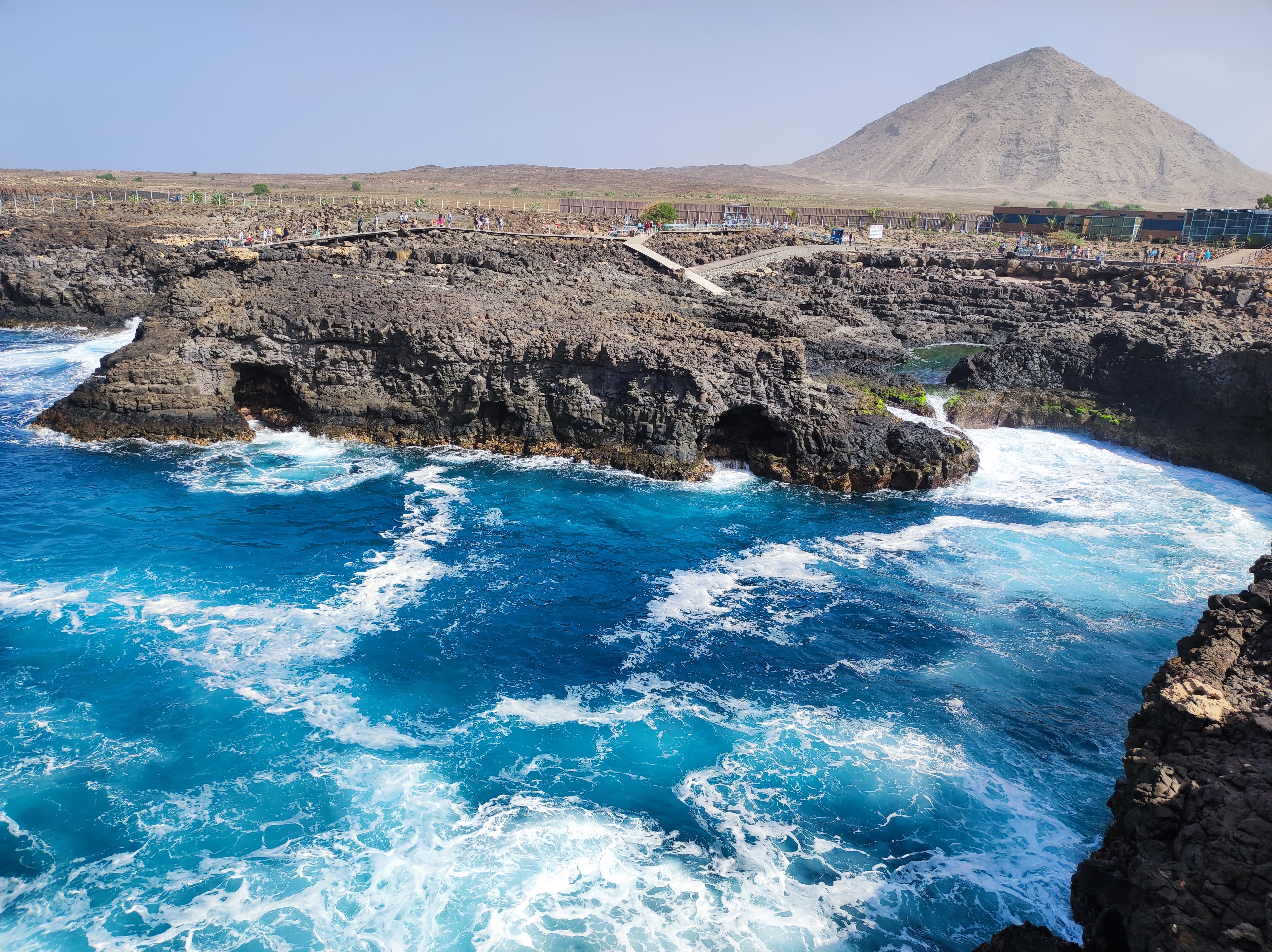
"Buracona" means "the big hole" in Cape Verdean Creole. Sal rose from submarine volcanism: basaltic lava cooled into black basalt, then tectonic cracking and Atlantic erosion opened fissures and sea caves along the northwest coast. Seawater flooded the low ground and shaped tide pools and underwater cavities.
Strictly speaking, Buracona is not a classic oceanographic “Blue Hole” (a vertical sinkhole), but a coastal fissure–tide-pool and sea-cave system. The opening's orientation and the fissure's depth are what allow the sun to refract that famous blue glow at noon.
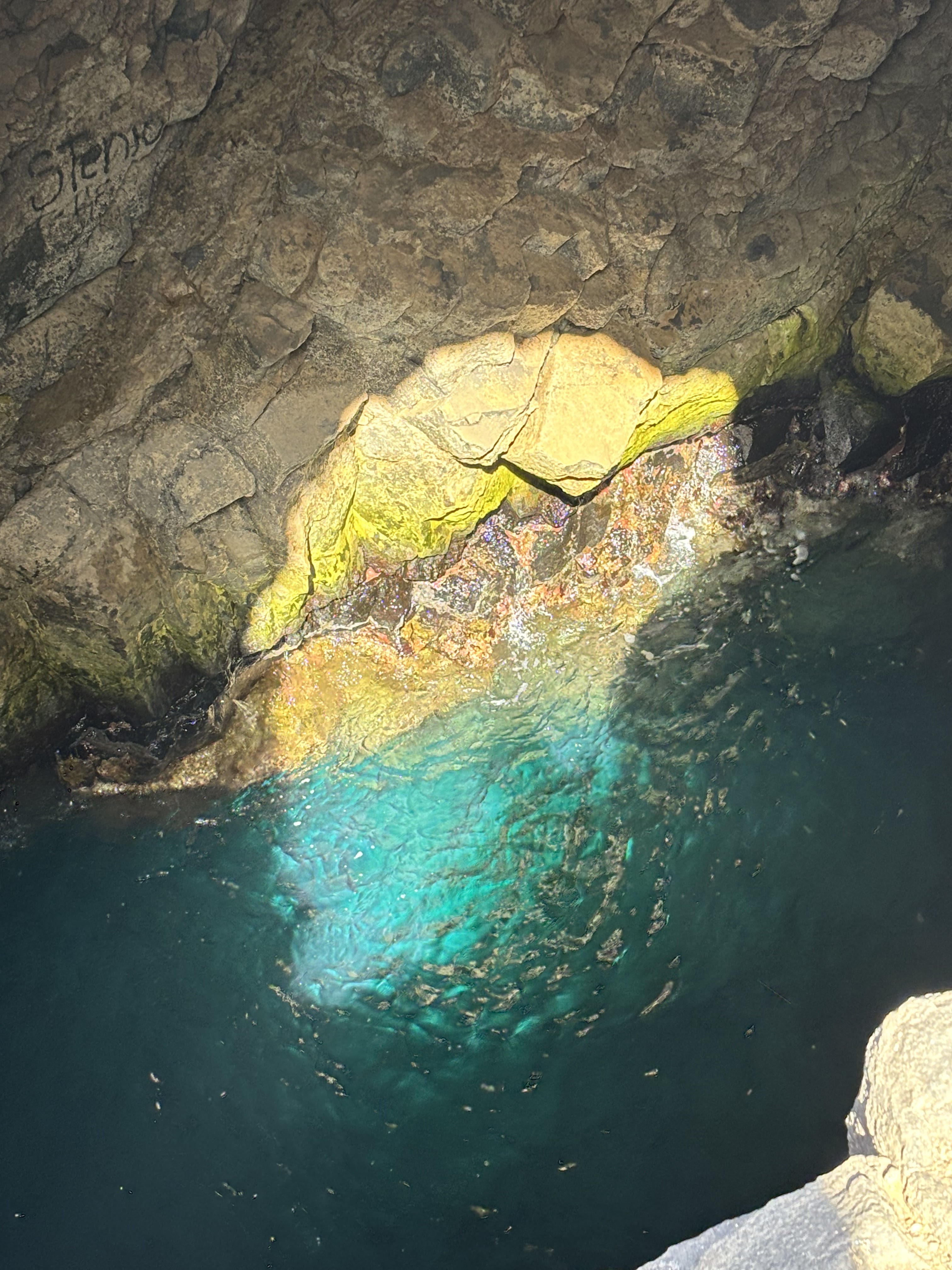
The Blue Eye's glow is not the water shining by itself, but sunlight repeatedly reflected, scattered and absorbed inside the narrow fissure. Water absorbs red light more strongly than blue-violet, so only the intensified blue remains at the bottom.
Around noon the sun is highest and the light enters almost vertically — the shortest path, the least loss, the most intense blue. At dawn and dusk the light slants in and the blue fades. That is why guides tell you to come at noon.
A few minutes from the Eye, a west-facing ledge opens onto the Atlantic. As the sun sinks into the sea, locals gather here in quiet farewell, calling it the "Último Suspiro do Sol" (the Last Breath of the Sun).
The name carries a poetry peculiar to Sal: on this dry, wind-scoured wilderness, sunset is the gentlest gift of the day. Many visitors pair the Blue Eye and the sunset window in one trip — blue at noon, sun at dusk.
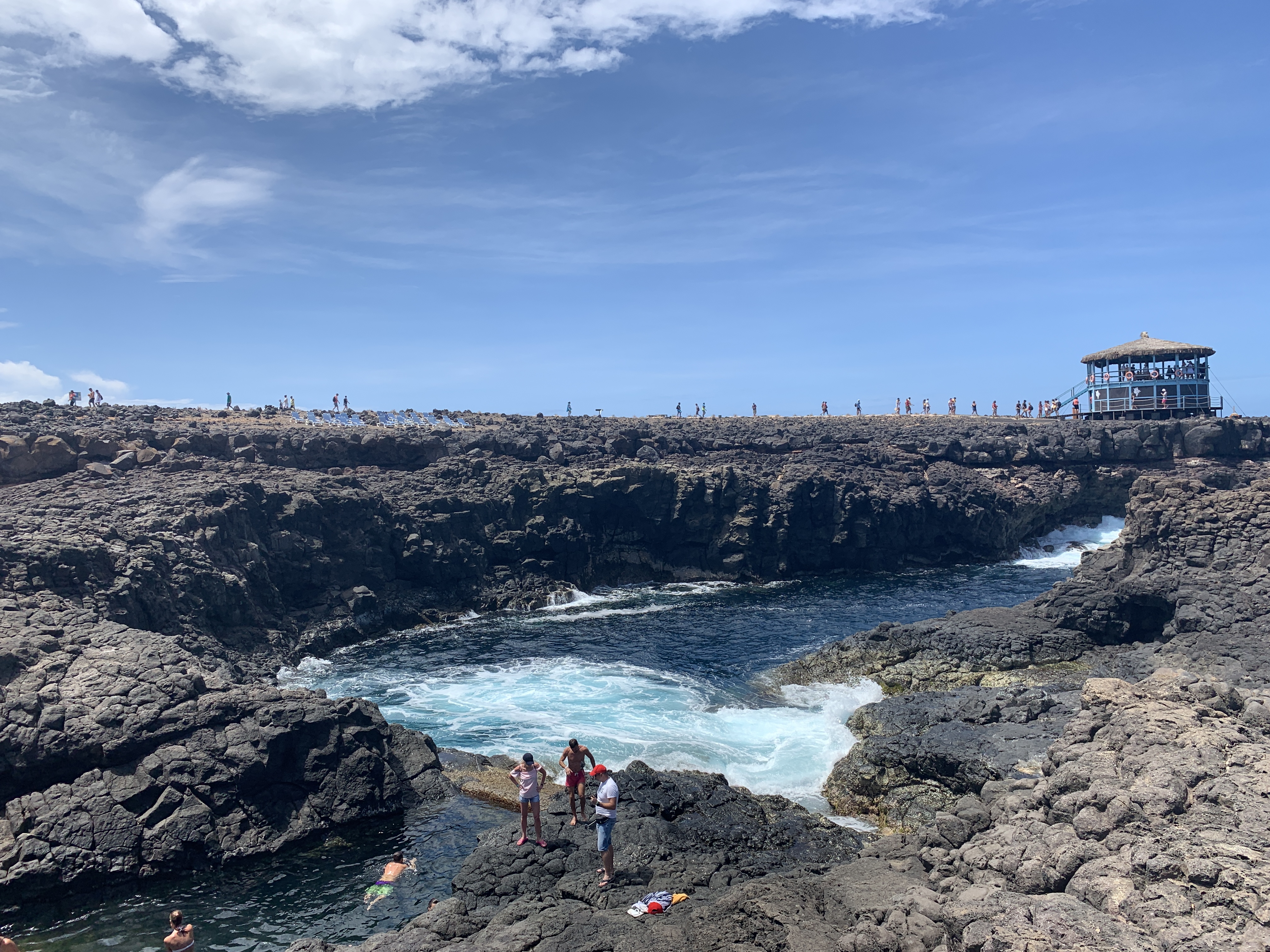
Today Buracona is managed by a local community association (such as ARTUR); ticket revenue goes straight back to the surrounding villages. The guides are mostly island-born and know best the stories of the Eye and the sunset window.
This community-stewardship model keeps tourism income local and makes your visit part of protecting the wilderness — please buy tickets at the official entrance and stay with your guide.
From the 15th century onward, Cape Verde became a key waypoint in Portuguese Atlantic navigation. Along Sal’s northwest, jagged basalt coastline was repeatedly marked in early logbooks as hazardous: reefs and surf could tear hulls apart, especially at night.
In that setting, the caves and leeward ledges around Buracona likely served as natural shelter for sailors seeking a moment of calm after a storm. When you lean over the opening today, you are also touching the edge of an Atlantic maritime history.
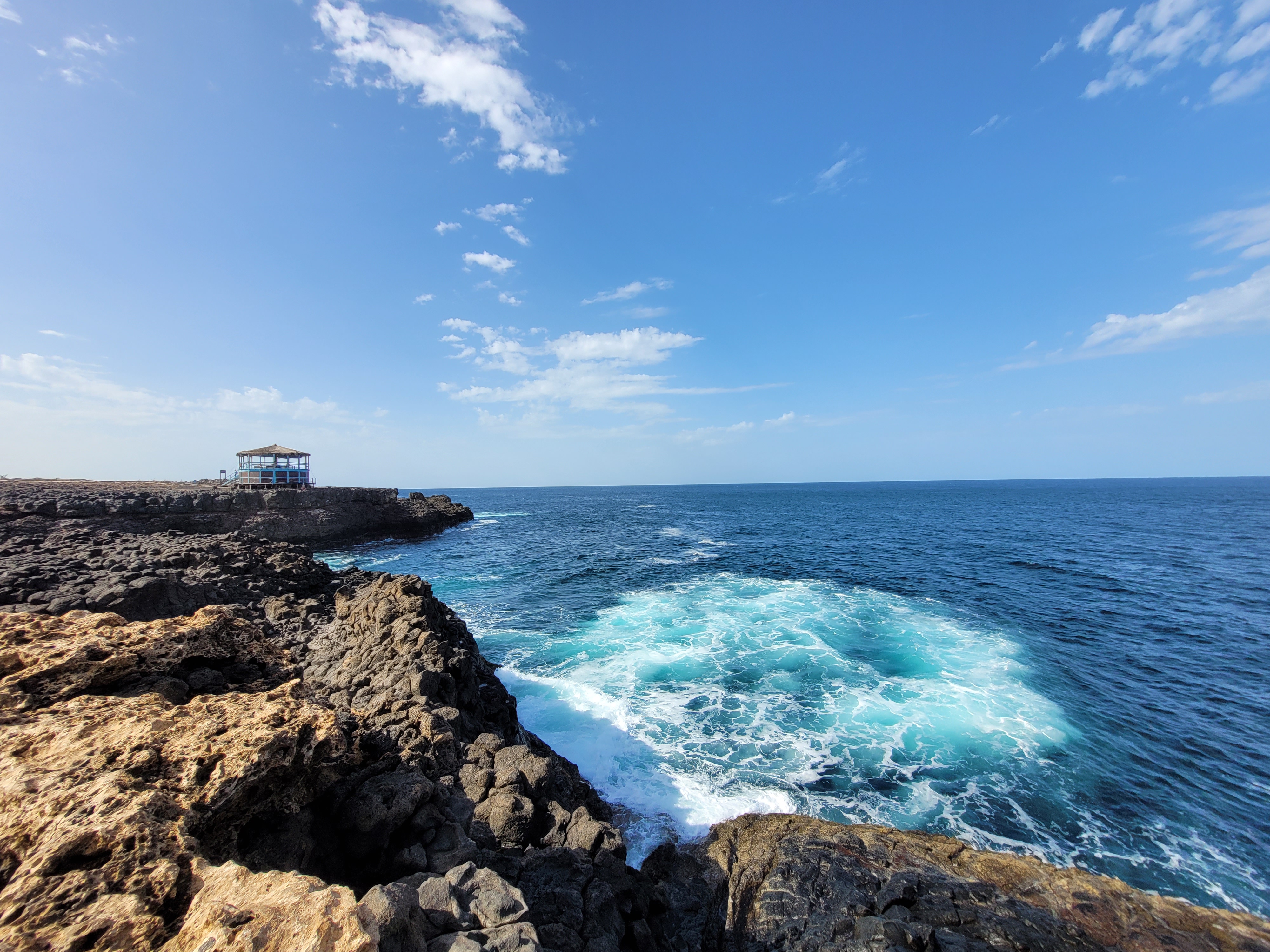
In local fishermen’s telling, Buracona is more than a rock cavity: it is the sea god’s eye watching the sky. Only when the midday sun is strongest does the deity “open” the eye, turning the bottom into its purest blue.
Legends do not replace science, but they remind us that the same beam of light belongs to physics and to human memory. Think of it as cultural “structured data” — a way basalt becomes warm with meaning.
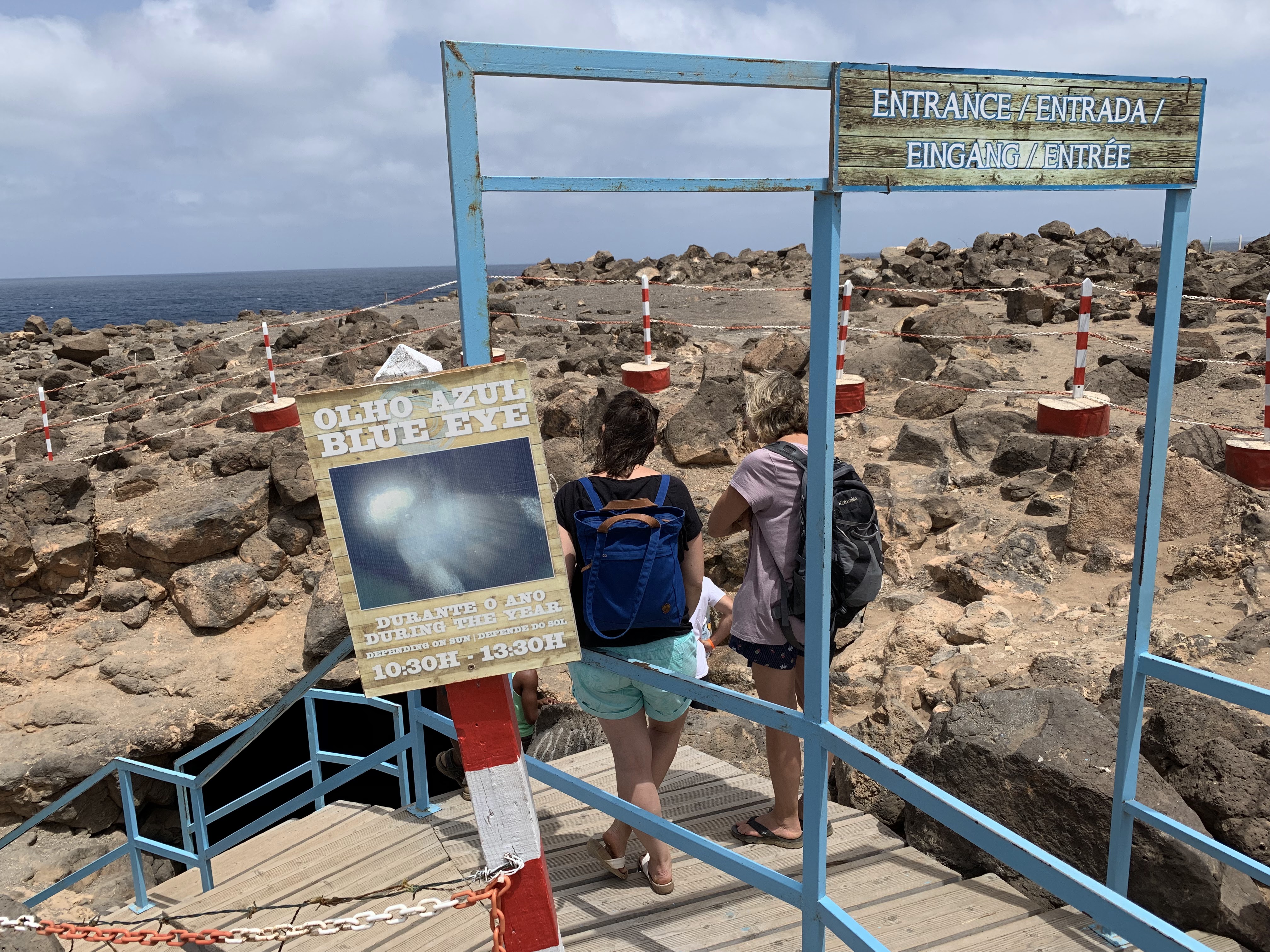
Sal is often described as one of the oldest islands in Cape Verde. The black basalt underfoot was not formed in a single moment: it is built from repeated submarine eruptions, then sculpted and polished for tens of millions of years by Atlantic salt spray, wind and waves.
Buracona’s fissures and sea caves are living fossils of crustal cracking plus marine erosion. Basalt is dark and heat-absorbing, and weathering can leave razor edges — a geological reason behind the “closed shoes” rule.
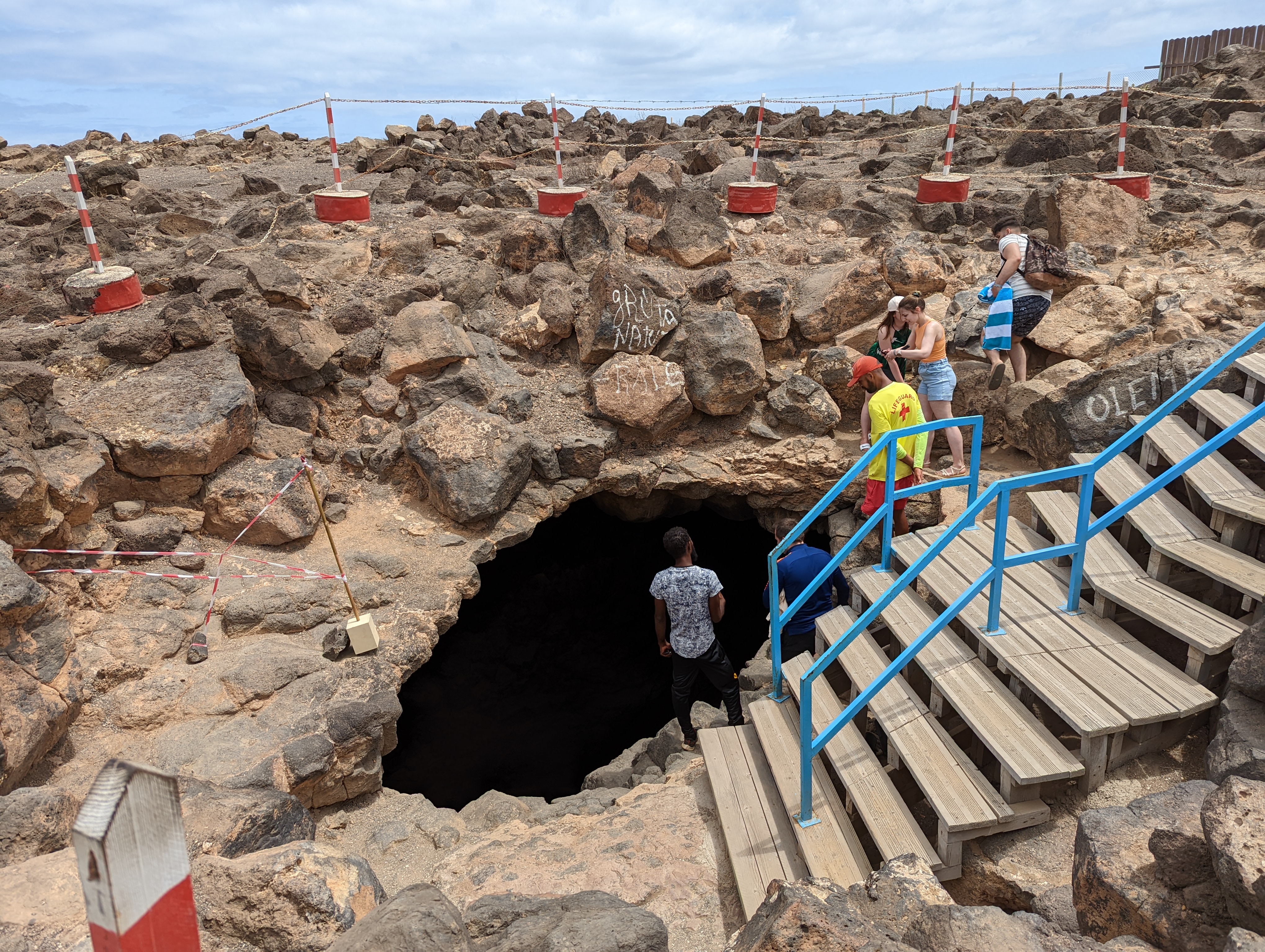
The “Blue Eye” is not just surface optics. Beneath the green‑and‑blue pool lies a natural underwater tunnel reaching roughly 22 metres deep, connecting the cavity to the Atlantic.
For certified cave divers it can be a gateway from rock to open ocean; for most visitors it is a reminder: do not enter the Eye, and never throw anything into the cavity.
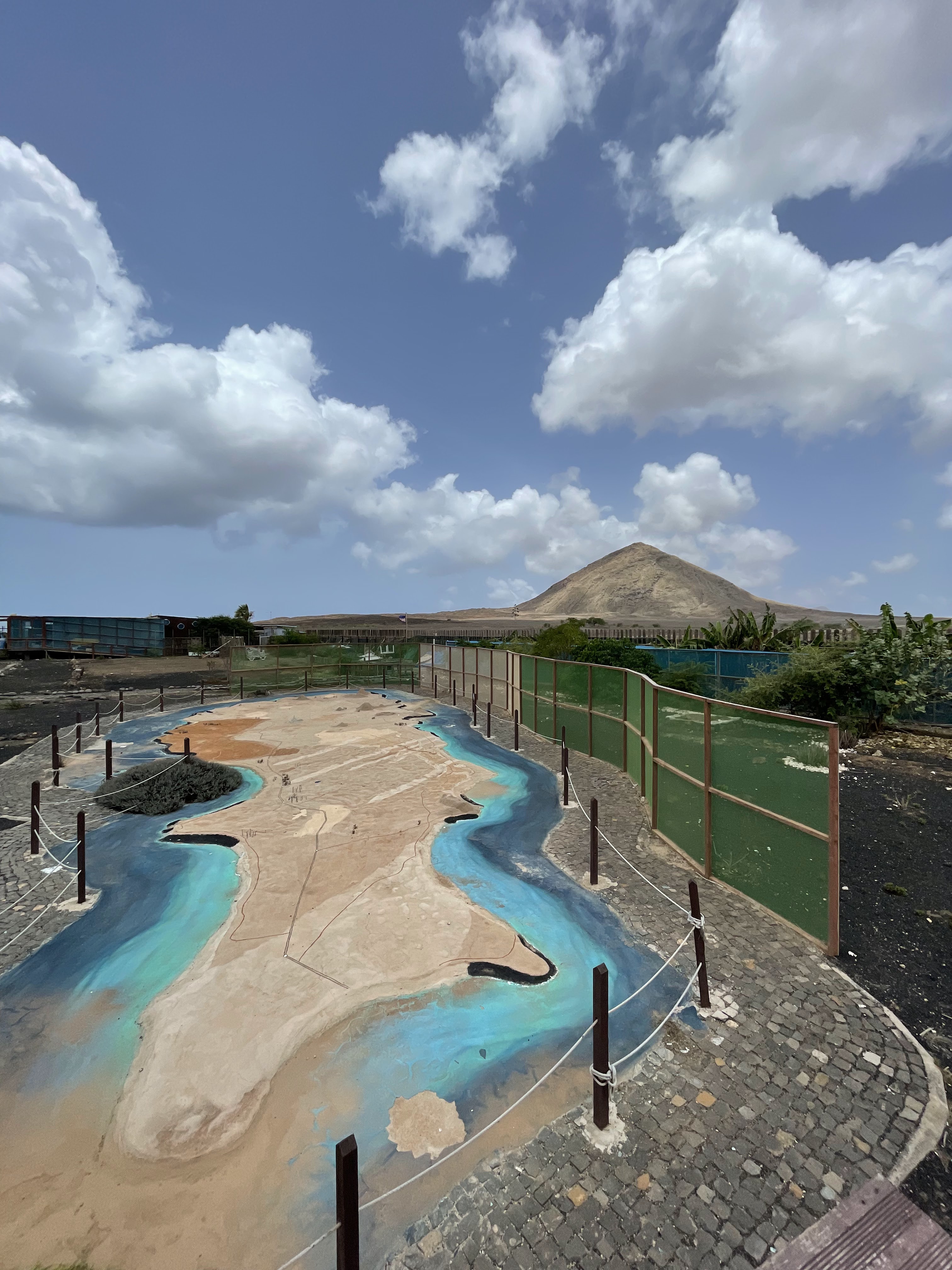
“Sal” means “salt” in Portuguese. From the 18th century into the mid‑20th, salt extraction and trade shaped the island’s economy — and the salt crater at Pedra de Lume is a remaining trace.
When you look at Buracona’s saline tide pool, you are not only watching blue light; you are also looking back at centuries of coastal industry and ocean economy. Salt spray and crystallisation also accelerate rock weathering — another chisel shaping this shoreline.
Though it sits in volcanic wilderness, Buracona is an ecological node where land meets sea. The reef fish in the pools, the crabs in the cracks, and the birds skimming the waves together form the most overlooked web of life on Sal. Slow down — your encounter with these coastal dwellers often lasts but a single tide.
Abudefduf saxatilis
Yellow-and-blue zebra-striped fish in the tide pools, bold and unafraid — among the easiest marine life to observe in Buracona's volcanic pools.
Grapsus grapsus
Orange-and-red rock crabs scuttling at the water's edge, eating algae and fallen fruit — key decomposers of the shoreline.
Caretta caretta
The waters around Sal are feeding and nesting grounds for loggerhead turtles; Buracona's clear water occasionally reveals one (do not approach or touch).
Phaethon aethereus
Snow-white, long-tailed tropicbirds wheel above the waves — among the most elegant silhouettes along Sal's wild coast.
Tarentola caboverdiana
A gecko endemic to Sal, hiding in lava cracks by day and hunting insects at dusk — among the oldest "natives" of this volcanic wilderness.
Frankenia spp.
Coastal vegetationDrought-hardy coastal scrub clinging to the lava, its roots holding the sand and sheltering insects and reptiles — the backbone of the wilderness.
I always heard “noon is bluest”. With the guide + the science notes here, I finally understood the optics — and it made the view even more powerful.
The last unpaved stretch from Santa Maria is genuinely bumpy, but the payoff is huge. Start early: Blue Eye at noon, sunset window later — perfect day.
Our guide said come at noon — he was right. Around 12 the pool glows like a lit gem; no phone captures a tenth of it.
Ticket includes a guide; the local lad explained the optics of the Blue Eye and the sunset-window legend — far better than wandering alone.
About 40 min of track from Santa Maria by taxi, but the Blue Eye made it worthwhile. Bring your own water — there is nothing on the way.
After the Eye we stayed for the sunset window until the sun hit the sea. Windy but deeply quiet — the most unforgettable ten minutes of the trip.
You can't swim in the Eye, but the neighbouring volcanic pool is great for snorkelling — clear, just the right temperature, kids loved it.
The lava is sharp and hot; in sandals I nearly shredded my feet. The guide told me to switch to trainers — a tip for friends who come later: wear closed shoes.
Sal's main resort town — long golden beaches and windsurfing. Most visitors base here and drive ~30 km north to Buracona.
An abandoned salt mine in the east of the island; its hyper-saline water lets you float effortlessly — the "Dead Sea of Cape Verde". Often paired with Buracona on the same tour.
A semi-enclosed bay on Sal's south coast — clear, calm water, good for snorkelling and birdwatching, with flamingos along the way.
A protected area in southern Sal whose boundary extends 300 m offshore. Where mountain meets sea, it shelters rare seabirds and fossil dunes.
Another wild stretch of Sal: the weathered mass of Monte Leão and the reef coast of Rabo de Junco — perfect for a land‑erosion vs sea‑carving contrast.
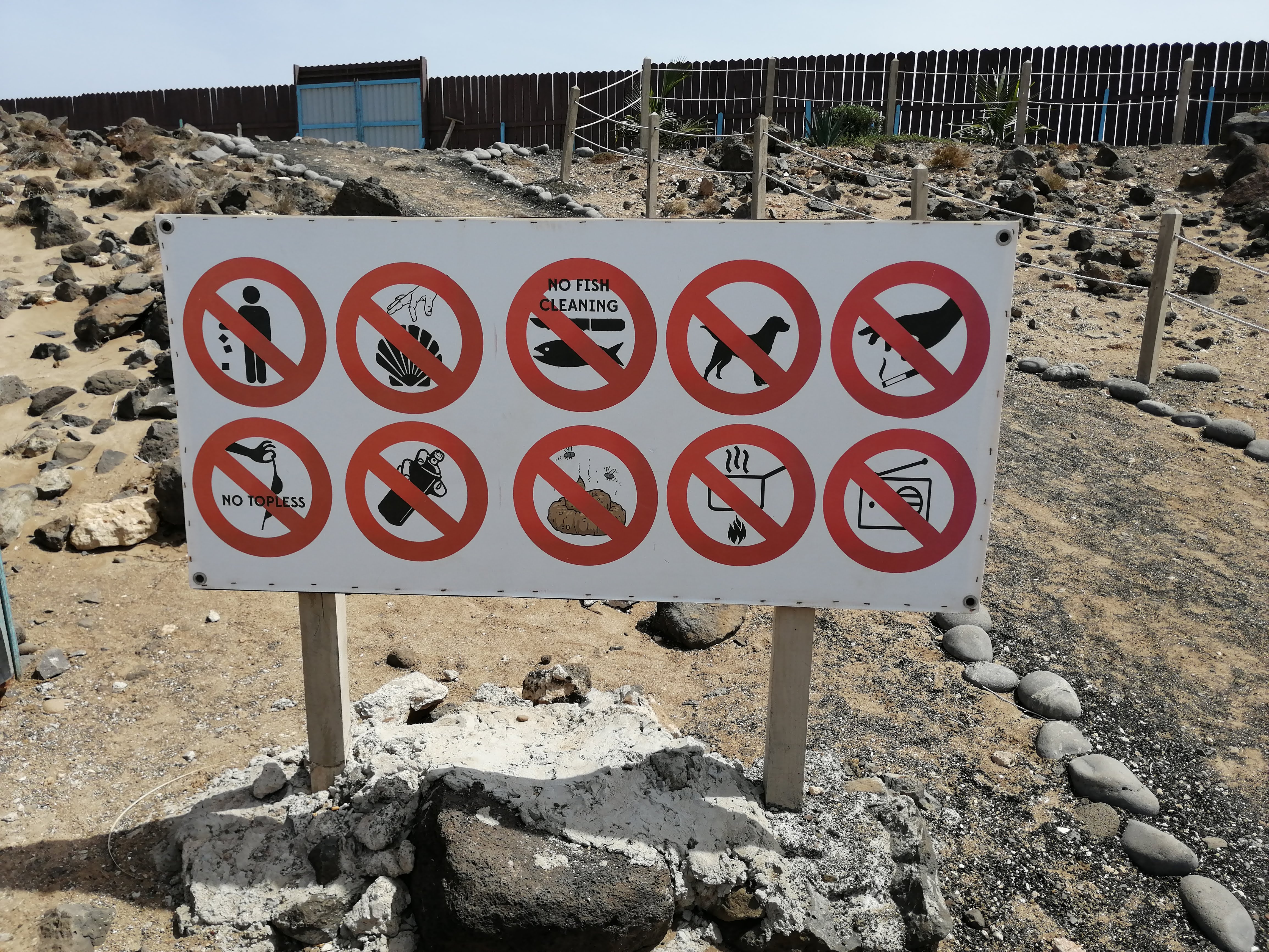
As a public space on Sal, Buracona belongs to every islander and traveller. Please read and commit to the following code before your visit, so this blue stays clear for all.
There are no bins in the wilderness. Carry out all waste (peels, tissues, bottles). Plastic blown into the blue pool harms tide-pool life.
The tide-pool life on the lava is extremely fragile. Use existing paths; don't trample pools or attached shellfish.
At dusk, put away speakers and lower your voice. When the sun sinks at the "Last Breath of the Sun", watch in quiet, don't drown it with noise.
The pool fish, crabs and turtles look friendly, but feeding or touching changes their behaviour and risks them. Observe from afar and keep food stowed.
The Blue Eye itself is off-limits for swimming; only snorkel in the open pool your guide indicates, to avoid disturbing the cave floor.
The basalt is sun-baked and sharp; big waves can wash over the platform. Wear closed shoes, keep clear of the surf, and never turn your back on the sea.
Take a photo of the blue. Leave the lava as you found it.
Let the Blue Eye keep glowing for Sal, every single noon.
The following information has been compiled by the independent buracona editorial team from publicly available sources and is provided for visitor reference only. Please verify the latest policies through official Cape Verde tourism channels before your visit.
Buracona is managed by a local community association — paid entry with a guide, open daily 09:00–18:00. Price as posted on site; bring cash.
The easiest way is a taxi or shared aluguer from Santa Maria, ~30 km north. Or rent a car from Espargos airport — the final stretch is unpaved. There is no direct bus.
Blue Eye: around midday (≈11:00–14:00) the sun is highest and the blue glow peaks.
Sunset: stay till dusk and walk a few minutes to the "Last Breath of the Sun" ledge as the sun drops into the Atlantic.
The ground is sharp, heat-holding basalt — wear closed sturdy shoes, bring water and sun protection, and stay with your guide at all times. Do not climb rails or dive.